



GPON OLT
Shenzhen Dechuangyu Technology Company :Your Professional GPON OLT Supplier!
Shenzhen Dechuangyu Technology Company is engaging in providing complete and high-performance fiber optic products and premise distribution solutions for customers worldwide. having its brand and specializing in R&D, manufacture, and sales of fiber optical communications equipment.
Rich Product Range
Our company can produce and sell SFP transceivers, optical transceivers, routers, WiFi range extension routers, 300Mbps wireless LTE 4G routers, 10G 40G 100G uplink layer 3 switches, etc.
Wide Range Of Uses
The products we produce can be widely used in global telecommunications companies, FTTH, electricity, hotels, hospitals, schools, governments, public places, etc.
Quality Guaranteed
Our products have passed ISO9001, FCC, CE, ROHS certification, and our products cover more than 80% of the world's countries including the domestic market, South America, Asia, Europe, and the United States. And the product warranty is 1 year, and some even last as long as 2 years.
Leading Service
We have many years of industry experience and a complete production management, quality supervision, sales service operation system. Whether you want to buy a 4G router or an optical transceiver, just send your requirements via email and we can customize the product for you.


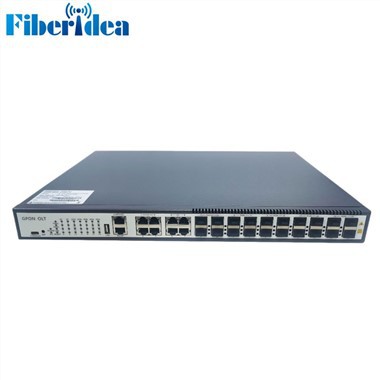


What is GPON OLT
GPON OLT, which stands for Gigabit Passive Optical Network Optical Line Terminal, is a key component of fiber-to-the-premises (FTTP) broadband access networks. It serves as the network equipment that connects service providers to subscribers over optical fibers. The OLT is typically located in a central office or a data center and is responsible for transmitting downstream data to customer premises at high speeds and receiving upstream signals from the customer premises equipment.
Features of GPON OLT
High Bandwidth and Speed
GPON OLTs provide incredibly high bandwidth capabilities, allowing for gigabit-speed data transmission. This makes them ideal for delivering bandwidth-hungry services like high-definition video streaming, online gaming, and cloud-based applications.
Scalability and Flexibility
GPON OLTs are highly scalable, making it easy to expand network capacity by adding additional ONUs or ONTs as the subscriber base grows. This scalability ensures network operators can meet increasing demand without requiring a complete infrastructure overhaul.
Cost-Effectiveness
GPON is a cost-effective solution for delivering broadband services. The passive optical network architecture reduces the need for active electronic components in the field, minimizing both capital and operational expenses. Additionally, the shared infrastructure allows for efficient resource utilization.
Reliability and Redundancy
GPON OLTs are designed with reliability in mind. They often come equipped with redundant power supplies, hot-swappable components, and failover mechanisms, ensuring uninterrupted service even during hardware failures.
Types of GPON OLT
8-Port OLT
These OLTs typically have eight PON ports, making them suitable for small to medium-sized deployments.
16-Port OLT
With sixteen PON ports, these OLTs can serve larger user bases and are commonly used by internet service providers (ISPs).
32-Port OLT
Designed for more extensive deployments, 32-port OLTs are capable of handling a significant number of ONUs or ONTs.
Chassis-Based OLTs
Chassis-based OLTs are modular and can accommodate a varying number of line cards. They are highly scalable and are suitable for large-scale deployments where flexibility and expansion options are essential.
Rack-Mount OLTs
These OLTs are designed to be installed in standard 19-inch racks, making them suitable for data centers and network facilities where space optimization is crucial.
Integrated OLTs
Some OLTs are integrated into other networking equipment, such as routers or aggregation switches. These integrated solutions are space-saving and can simplify network architecture.
Outdoor OLTs
Outdoor OLTs are designed to be deployed in outdoor cabinets or enclosures. They are ruggedized to withstand harsh environmental conditions and are commonly used in rural or outdoor network deployments.
Compact OLTs
Compact OLTs are smaller in size and are suitable for deployments in locations with limited space, such as residential areas or small businesses.
Network Size and Scalability
Consider the size of your network and its potential for future growth. Choose an OLT that can initially accommodate the number of ONU (Optical Network Unit) connections you need and can easily scale as your network expands.
Port Density
Evaluate the number of GPON ports required based on the number of subscribers you plan to serve. Ensure the OLT has sufficient GPON ports to meet your current and future needs.
Throughput and Bandwidth
Assess the OLT's maximum throughput and bandwidth capabilities. Ensure it can handle the expected traffic loads without congestion or performance issues.
Redundancy and High Availability
Consider redundancy options for critical components, such as power supplies and control boards. High availability features can minimize network downtime.
Management and Control
Look for OLTs with strong management and control capabilities. Centralized management and monitoring tools simplify network administration and troubleshooting.
Compatibility
Ensure the OLT is compatible with the GPON ONU/ONT (Optical Network Terminal) devices you plan to deploy. Interoperability is important for seamless integration.
Quality of Service (QoS)
Verify that the OLT supports QoS features to prioritize different types of traffic (e.g., voice, video, data) and provide a better user experience.
Security
Assess the OLT's security features, including authentication, encryption, and access control, to protect the network from unauthorized access and attacks.
Power Efficiency
Consider the power consumption of the OLT, especially if you're deploying it in an environmentally conscious or energy-restricted area. Energy-efficient OLTs can help reduce operational costs.
Vendor Reputation and Support
Research the reputation of the OLT manufacturer or vendor. Choose a reputable company with good customer support, regular firmware updates, and a reliable warranty.
Parts of GPON OLT

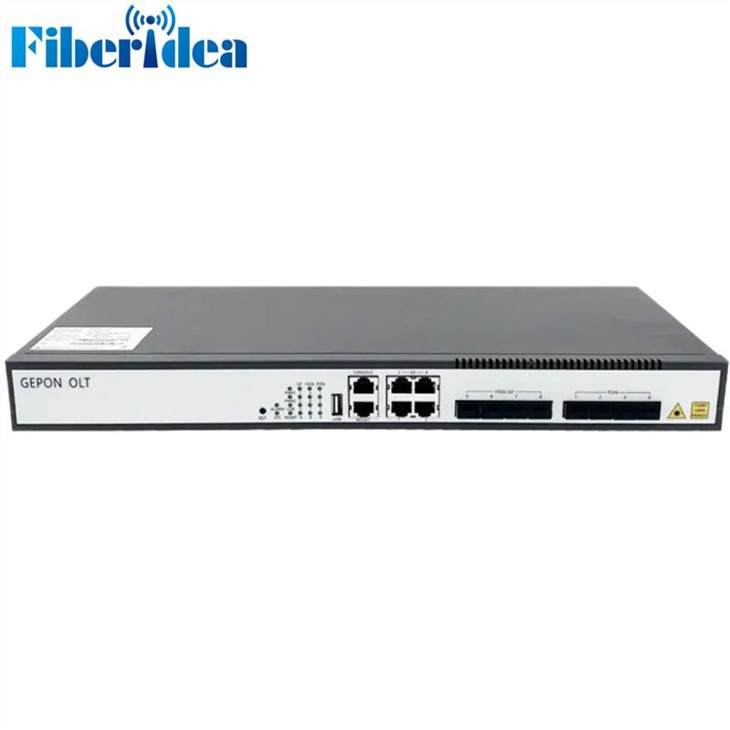
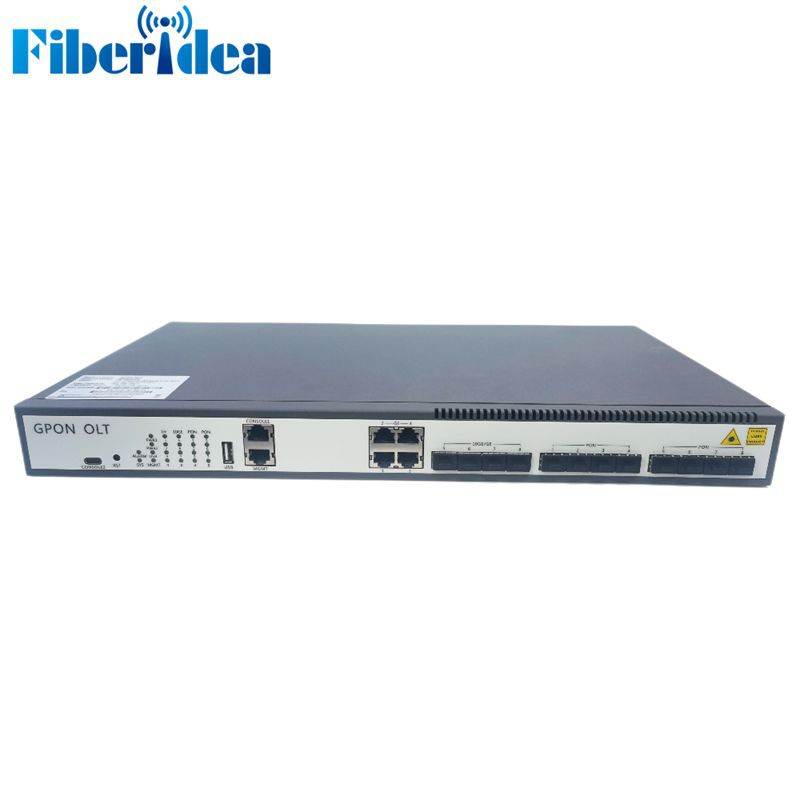
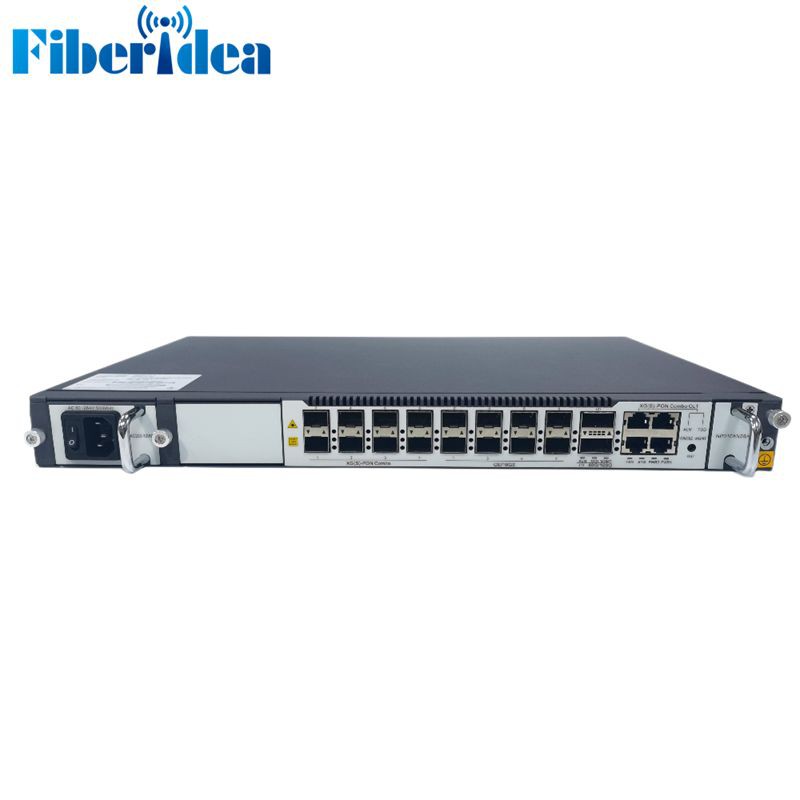
Main Processing Unit (MPU)
The MPU is the central processing unit of the OLT, responsible for executing various software functions and managing network traffic.
PON Ports
These are the physical optical interfaces where the OLT connects to the passive optical splitter and the optical fibers leading to the ONUs (Optical Network Units) or ONTs (Optical Network Terminals) at the customer premises. PON ports support multiple wavelengths for upstream and downstream data transmission.
Uplink Interfaces
OLTs usually have multiple uplink interfaces, such as Gigabit Ethernet or 10 Gigabit Ethernet ports, for connecting to higher-level network elements, like routers or switches in the core network.
Control and Management Interfaces
These interfaces allow network administrators to access and configure the OLT for maintenance, monitoring, and troubleshooting purposes. Common control and management interfaces include RS-232, Telnet, SSH, or web-based graphical user interfaces (GUIs).
Optical Transceivers
These are essential for converting electrical signals into optical signals for transmission over the optical fiber. The optical transceivers must match the specifications of the GPON technology being used.
Power Supply Units (PSUs)
GPON OLTs are equipped with redundant power supply units to ensure network reliability. These PSUs provide power to all the components within the OLT.
Cooling System
OLTs generate heat during operation, so they are equipped with cooling fans or other cooling mechanisms to maintain an optimal operating temperature.
Management and Control Software
The OLT runs specialized software that manages and controls various aspects of the GPON network, including provisioning, Quality of Service (QoS), traffic management, and security. This software enables network operators to configure and monitor the OLT and the connected ONUs or ONTs.
Redundancy and High Availability Features
Many OLTs are designed with redundancy features to ensure uninterrupted service in case of component failures. These features may include dual MPUs, dual power supplies, and hot-swappable components.
Security Features
GPON OLTs often come with security features like access control lists (ACLs), firewall capabilities, and encryption to protect the network from unauthorized access and cyber threats.
Synchronization Interfaces
For delivering services like Voice over IP (VoIP) and IPTV, GPON OLTs may include synchronization interfaces, such as IEEE 1588v2 or Synchronous Ethernet, to maintain accurate timing across the network.
Benefits of Using GPON OLT
High Port Density
GPON OLTs come with a varying number of PON (Passive Optical Network) ports, which dictate how many ONUs (Optical Network Units) or ONTs (Optical Network Terminals) can be connected to the OLT.
Advanced Traffic Management
GPON OLTs employ Quality of Service (QoS) mechanisms to prioritize different types of traffic (e.g., voice, video, data) for optimized user experience.
Security Features
OLTs are equipped with security measures such as access control lists (ACLs), encryption, and firewall capabilities to safeguard against unauthorized access and protect sensitive data.
Remote Management and Configuration
OLTs allow network administrators to monitor, configure, and troubleshoot the equipment remotely. This reduces the need for physical access to the OLT, saving time and resources.
Dynamic Bandwidth Allocation (DBA)
OLTs dynamically allocate bandwidth to ONUs based on their traffic requirements. This ensures that resources are used efficiently, especially during peak usage times.
Advanced OAM (Operations, Administration, and Maintenance) Features
OLTs come equipped with strong OAM capabilities for monitoring the health and performance of the network, facilitating fault detection and troubleshooting.
How to Maintain GPON OLT
Regular Inspections
Conduct visual inspections of the OLT hardware to check for any signs of physical damage, dust accumulation, or loose connections.
Temperature Control
Ensure that the OLT is placed in a location with adequate ventilation to prevent overheating. Use temperature sensors if necessary to monitor the operating environment.
Software Updates
Keep the OLT firmware updated to the latest version provided by the manufacturer. Software updates often include bug fixes, security patches, and performance improvements.
Backup Configuration
Regularly backup the OLT configuration. In case of a failure or system crash, restoring the configuration can help quickly restore service.
Performance Monitoring
Utilize built-in diagnostics and monitoring tools to track the performance of the OLT. Look for any unusual patterns or drops in service quality.
Optical Fiber Inspection
Inspect the optical fibers connected to the OLT for any visible damage or contamination. Fiber inspection tools can help identify issues that may not be apparent to the naked eye.
Preventive Maintenance
Follow the manufacturer's recommendations for preventive maintenance, which may include cleaning the optics, checking fiber connections, and replacing consumables like batteries or fans.
Security
Implement appropriate security measures to protect the OLT from unauthorized access. This includes securing management interfaces, applying firewall rules, and using encryption when possible.
Certificate


Frequently Asked Questions