



Media Converter
Shenzhen Dechuangyu Technology Company :Your Professional Media Converter Supplier!
Shenzhen Dechuangyu Technology Company is engaging in providing complete and high-performance fiber optic products and premise distribution solutions for customers worldwide. having its brand and specializing in R&D, manufacture, and sales of fiber optical communications equipment.
Rich Product Range
Our company can produce and sell SFP transceivers, optical transceivers, routers, WiFi range extension routers, 300Mbps wireless LTE 4G routers, 10G 40G 100G uplink layer 3 switches, etc.
Wide Range Of Uses
The products we produce can be widely used in global telecommunications companies, FTTH, electricity, hotels, hospitals, schools, governments, public places, etc.
Quality Guaranteed
Our products have passed ISO9001, FCC, CE, ROHS certification, and our products cover more than 80% of the world's countries including the domestic market, South America, Asia, Europe, and the United States. And the product warranty is 1 year, and some even last as long as 2 years.
Leading Service
We have many years of industry experience and a complete production management, quality supervision, sales service operation system. Whether you want to buy a 4G router or an optical transceiver, just send your requirements via email and we can customize the product for you.

What is Media Converter
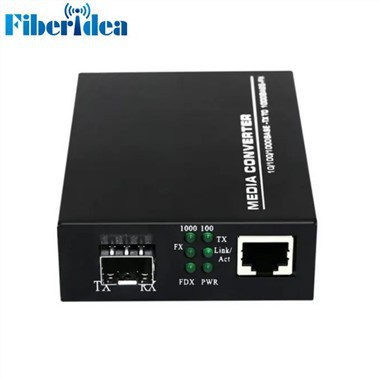
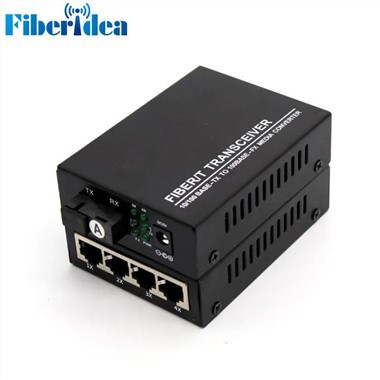
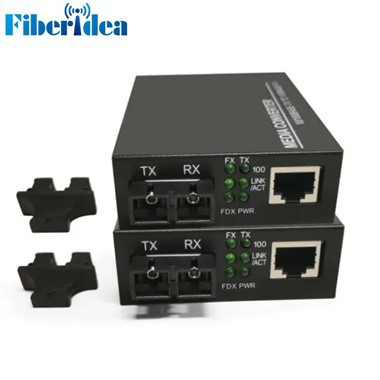
A media converter is a networking device that transparently converts Ethernet or other communication protocols from one cable type to another type, usually copper CATx/UTP to fibre. Media converters are often used in pairs to insert a fibre segment into copper networks to increase cabling distances and enhance immunity to electromagnetic interference. They can also extend LANs, and convert link speeds and fibre modes.
Extend LAN Distance With Fibre
Copper-based Ethernet connections are limited to a data transmission distance of 100 metres when using UTP cable. By using Ethernet to fibre conversion, you can extend link distance up to 80 kilometres or more.
Maintain Investments in Existing Equipment
Media converters enable you to migrate a local network to fibre while protecting your investment in existing copper-based hardware. This means no costly, time-consuming overhaul to your infrastructure.
Protect Data From Interference
Electromagnetic interference, or EMI, can cause corruption of data over copper-based Ethernet links. Data transmitted over fibre optic cable is completely immune to this type of noise, ensuring optimal data transmission and network performance.
Speed Conversion
Media converters allow you to convert link speeds from 10 Mbps to 100 Mbps or from 100 Mbps to 1000 Mbps.
Power Over Ethernet
Power over Ethernet, or PoE, simplifies installation of Wi-Fi access point, IP cameras and more by eliminating the need for a local AC power circuit.
Types of Media Converter
Copper-to-Fibre Media Converters
Copper-to-fibre media converters enable connections of copper-based Ethernet equipment over a fibre optic link. This extends links over greater distances with fibre optic cable, protects data from noise and interference, and future-proofs a network with additional bandwidth capacity.
Fibre-to-Fibre Media Converters
Fibre-to-fibre media converters connect different fibre optic networks and support conversion from one wavelength to another. They provide connectivity between single-mode and multimode fibre, as well as between dual and single fibre.
PoE Media Converters
Power-over-Ethernet (PoE) media converters provide reliable and cost-effective fibre distance extension to PoE-powered devices. PoE media converters can power devices like IP phones, videoconferencing equipment, IP cameras and Wi-Fi devices over copper UTP cabling.

Parts of Media Converter
Optical Transceivers
These are the components that send and receive optical signals. They are usually found at each end of a fiber optic link and can be SFP, SFP+, QSFP, or other types depending on the speed and capacity needed.
Electrical Interface Ports
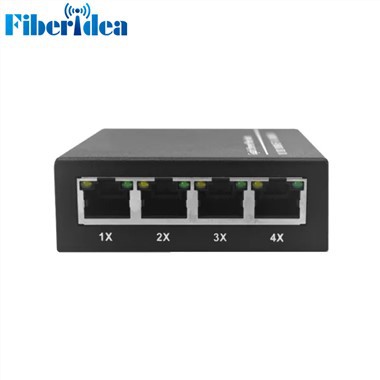
These are RJ45 connectors that connect to copper cables such as Ethernet cables (CAT5e, CAT6, etc.). These ports convert electrical signals received from the copper network into optical signals for transmission over fiber, or vice versa.
Digital Signal Processor (DSP)
This component processes the incoming and outgoing signals, performing tasks such as signal modulation, demodulation, error correction, and signal amplification.
Power Supply Unit
It provides the necessary power to operate the media converter. This can be an external power adapter or in some cases, power can be supplied through the Ethernet port using Power over Ethernet (PoE).
Microcontroller
This is the brain of the media converter, responsible for controlling the overall operation, managing the DSP, and handling communication with other devices.
Fiber Optic Connectors
Depending on the type of fiber used (single-mode or multi-mode), the media converter will have corresponding connectors such as SC, LC, ST, or MTP/MPO.
LED Indicators
These provide visual feedback about the status of the media converter, including link status (active or down), data rate, and sometimes power supply status.
How to Choose Media Converter
Interfaces
Determine which types of interfaces you need. For example, if you want to connect a copper Ethernet network to a fiber optic network, look for a converter with an RJ45 port for the copper side and an SFP port for the fiber side.
01
Fiber Type
Decide whether you need single-mode or multi-mode fiber optic connectivity. Single-mode fibers support longer distances but require more expensive transceivers, while multi-mode fibers are less expensive but have shorter range limitations.
02
Distance
Consider the distance over which you need to transmit data. Different types of transceivers are optimized for various distances, from a few hundred meters to tens of kilometers.
03
Data Rate
Match the media converter's speed to your network requirements. Common speeds include 10/100Mbps, 1Gbps, 10Gbps, and higher. Ensure the converter supports the data rates of your existing network equipment.
04
Transceiver Compatibility
Verify that the media converter is compatible with the type of transceiver modules you plan to use or that are already in place.
05
Overcoming Copper's Limits
Media converters extend LAN reach far beyond the 100-meter limit of copper CATx cabling by converting links to fiber. Fiber links enable link distances of up to 80 kilometers.
Enterprise
PoE media converters backhaul Wi-Fi data and power access points, improving network functionality and reliability in commercial applications.
Security and Surveillance
PoE+ simplifies installation of IP security cameras by eliminating the need for a power circuit near the installed device. PoE+ media converters power these devices and backhaul signals to remote data centers or operations centers.
Government and Defense
Media converters provide secure, high-performance LAN connections from the data center to desktops with fiber. Highly reliable with unsurpassed bandwidth, speed and security, fiber to the desktop is a perfect fit for government and defense applications.
Fiber Mode Conversion
Never worry about varying fiber types in your application again. Convert fiber links from multimode to single-mode and vice versa with media converters.

Certificate


Frequently Asked Questions